13th May 2026Reading Time: 4 Minutes
Many people start their financial journey with the same question: “How long does it take to build credit?” It’s a fair concern, especially if you’re preparing to apply for a loan, rent an apartment, or qualify for better financial products.
What often gets overlooked is that credit is not something that can be fixed overnight. There is no single action that instantly creates strong credit. Instead, credit develops gradually through time, consistency, and responsible behavior. Understanding this early can help you avoid frustration and focus on habits that actually move your credit in the right direction.
This article explains what “good credit” really means, how to build credit, and what factors influence the pace at which credit improves.
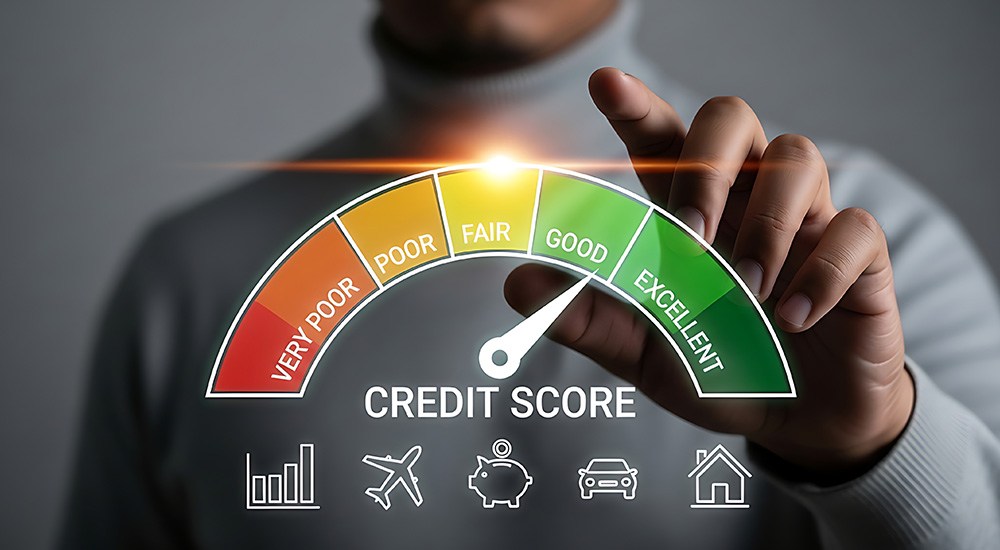
A good credit score typically falls within a range rather than being defined by a single number. While scoring models can vary, credit scores are often grouped into broad categories. Scores below 580 are generally considered poor, scores from about 580 to 669 are viewed as fair, scores between 670 and 739 are commonly labeled as good, and scores of 740 and above are often considered excellent. Lenders use these ranges to evaluate how reliably someone has managed credit over time.
What qualifies as “good” can also depend on the financial product being considered. For example, a score that may be sufficient to qualify for certain credit cards might not meet the requirements for a mortgage or auto loan. Lenders assess risk differently based on the type of borrowing, loan size, and repayment terms, which is why credit expectations can vary from one situation to another.
At its core, a strong credit score reflects consistent financial behavior, including making on-time payments, keeping balances manageable, and using credit responsibly over time. Readers who want a clearer explanation of what qualifies as a good credit score and how different score ranges are defined can explore SBI California’s Education Center article, What Is a Good Credit Score? for a more detailed breakdown.
For someone new to borrowing, a common follow-up question is “How long does it take to establish credit?” The answer depends on whether you truly have no credit history or whether you have a thin credit file with limited activity.
When you build credit from scratch, your first credit account establishes your credit profile. Once activity is reported to the credit bureaus, it typically takes about three to six months for an initial score to appear. Early scores can fluctuate because there is very little data to balance new activity.
Over the next six to twelve months, consistent behavior—such as making payments on time and keeping balances low—helps stabilize your profile. This is why many people also ask “How long can it take to build credit?” Credit improvement continues as your history grows, not just when a score first appears.
One of the most common tools used at this stage is a credit card. When used responsibly, credit cards help establish payment history, demonstrate ongoing credit activity, and create a track record lenders can evaluate over time. SBI California’s personal credit cards are designed to support everyday spending with clear terms and account visibility, making them a practical option for customers who are beginning to build or establish credit.
Several factors influence how quickly credit improves, regardless of where you’re starting.
Payment history is the most important. Making every payment on time builds trust with lenders, while even one missed payment can significantly slow progress.
Credit utilization also plays a major role. This refers to how much of your available credit you’re using. Lower balances relative to credit limits generally support healthier scores.
Length of credit history matters as well. Time is a factor that cannot be rushed, which is why questions like “How long does it take to build credit?” don’t have a one-size-fits-all answer.
Finally, new credit inquiries can affect short-term scores. Applying for multiple accounts in a short period may temporarily lower scores, especially for those early in the credit-building process.
Many people delay progress without realizing it. Missed or late payments often happen due to poor organization rather than lack of funds. Carrying high balances can also limit improvement, even when payments are technically on time.
Another common mistake is opening multiple accounts too quickly in an attempt to speed things up. This can reduce the average age of accounts and increase inquiries, both of which can work against achieving a good credit score.
Cash-flow challenges can also create problems. When income and bills aren’t managed carefully, it becomes easier to miss due dates or rely too heavily on credit.
Using a reliable checking account as a financial hub can help support on-time payments, autopay setup, and overall cash-flow stability. SBI California’s personal checking accounts make it easier to manage incoming funds, schedule recurring payments, and stay organized, which can help reduce missed due dates and support healthy credit habits.
SBI California takes an education-first approach to credit. Rather than encouraging quick fixes, the focus is on helping customers understand how credit works and how responsible usage supports long-term financial health.
By offering clear educational resources and thoughtfully designed products, SBI California helps customers make informed decisions as their credit develops. This aligns with the reality behind questions like “How long does it take to establish credit?”—credit growth depends far more on consistency than speed.
If you’ve ever wondered how to build credit, the most important takeaway is that credit is built over time. Strong credit reflects steady habits, not shortcuts.
Making payments on time, keeping balances manageable, and staying organized all contribute to long-term success. With patience, consistency, and the right financial tools, achieving and maintaining a good credit score becomes both realistic and sustainable.


Enter your email to get access to our latest insights and articles.
By submitting your email you agree to receive promotional communications from SBI California. You may unsubscribe at any time.
Copyright © State Bank of India, California 2026, All Rights Reserved.